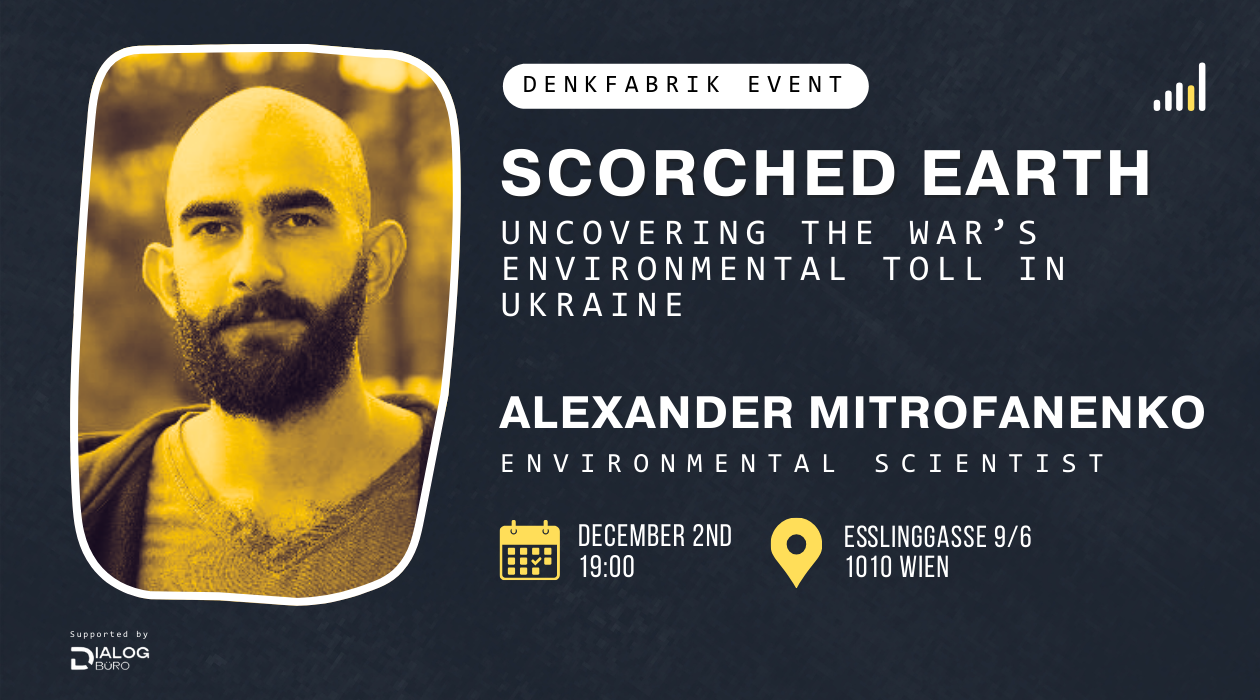
Armed conflict is inherently destructive. Beyond the immediate human suffering, war leaves behind a toxic legacy: it devastates ecosystems, endangers human health, and threatens long-term recovery. What does international experience tell us on the lasting impact of war on environment and what can Ukraine learn from it to overcome it?
To get the answers, we invite Alexander Mitrofanenko researcher at BOKU and a co-author of a landmark report by United Nations on monitoring and assessment methods of war’s environmental footprint.

At this talk you will learn:
- How damage to chemical and fuel industries, waste systems, and urban infrastructure is creating widespread pollution
- How agriculture, forests, and protected areas have been affected and what this means for food security and biodiversity
- How governance breakdown and institutional disruption amplify environmental and health risks during war
- How lessons from past conflicts help shape current monitoring and remediation strategies
The event takes place with support of Dialogbuero Vienna
🕔 December 2nd, 19:00
📍 Eßlinggasse 9/6, 1010 Wien, Dialogbüro, 2nd floor
✍️ Free entry upon a sign-up: see the button above
🗣 Event language is English
About the speaker:
Alexander Mitrofanenko is a researcher at the Institute of Landscape Planning at BOKU University, Vienna, focusing on science-society interactions in protected areas, particularly UNESCO biosphere reserves. He is currently on PhD academic leave from his position at GRID-Arendal, an environmental non-profit organisation based in Norway that works at the science–policy interface on global sustainability challenges, where he worked as an expert in the Transboundary Governance and Environmental Crime Programme.
Leave a Reply